You would expect a web developer to tell you that AI cannot build your website. That would be convenient for me, and it would not be true.
I use AI tools every day when I build. They write first drafts of code, catch mistakes and save hours on work that used to be tedious. And the AI website builders from Wix, Squarespace and others, plus code tools like Lovable, Bolt and v0, can put a decent looking site online in an afternoon.
So the honest answer is: sometimes, yes. The useful question is when that is enough, and when it quietly costs you customers.
What AI builders get right
Speed and price. You describe your business, pick a style and get a full set of pages with text and photos in minutes, for the cost of a monthly subscription. For a new business that needs to exist online by Friday, that is a real advantage.
They also make updates easy. Changing your hours or adding a photo does not need anyone else, and a builder handles hosting and security updates for you.
Developers are not immune to this shift either. In Stack Overflow's 2025 developer survey, most developers said they use AI in their work or plan to.
The same survey has a second number that matters more for you. 46% of developers said they do not trust the accuracy of what AI tools produce, up from 31% the year before. The most common complaint was answers that are "almost right, but not quite." The most experienced developers were the most cautious of all, because they see what slips through.
Where they fall short for a business
A good looking home page is the easy part. These are the places where AI-built sites usually break, and they are the parts that make a website earn money.
Bookings, payments and the tools you already use. A builder can add a booking widget, but connecting it to your calendar, your payment processor, your CRM or your point of sale, and making sure a customer gets the right confirmation every time, is where the afternoon becomes a month.
Speed on a phone. Builders often load a lot of code to support every feature for every customer. Your page carries all of it. On a mid-range phone over cellular data, that can mean a slow first screen, and people leave before it loads.
Accessibility. AI tools copy the patterns of the web they learned from, and most of the web fails here: WebAIM found accessibility failures on 95.9% of the top million home pages this year. In Florida, that is no longer only a design problem. I explain why in Florida ADA website lawsuits.
Search basics. Titles, descriptions, page structure, local business markup and a clear statement of where you work. AI builders fill in some of it. Rarely all of it, and rarely with your actual service area.
Who owns it. Many builders do not let you take your site with you. If prices go up or the company changes direction, you start over.
AI website builder
Online in an afternoon. A monthly subscription. Easy to edit yourself. Template layouts, the builder's own code and limited integrations. You rent the site, and moving away usually means rebuilding it.
Developer-built site
Online in two to four weeks. A one-time project, from $3,000 with me. Built around your bookings, payments and service area, tested for speed and accessibility on real phones. You own the code and can take it anywhere.
Vibe coding: you own the bugs too
There is a newer option between the two. Tools like Lovable, Bolt and Claude Code let you describe a site in plain English and get real code back. People call it vibe coding, and for a prototype or a one-page launch it can work surprisingly well.
The catch is that the code is now yours. Hosting, deploying, fixing and securing it are your job too, and AI code needs more checking than it looks like it does.
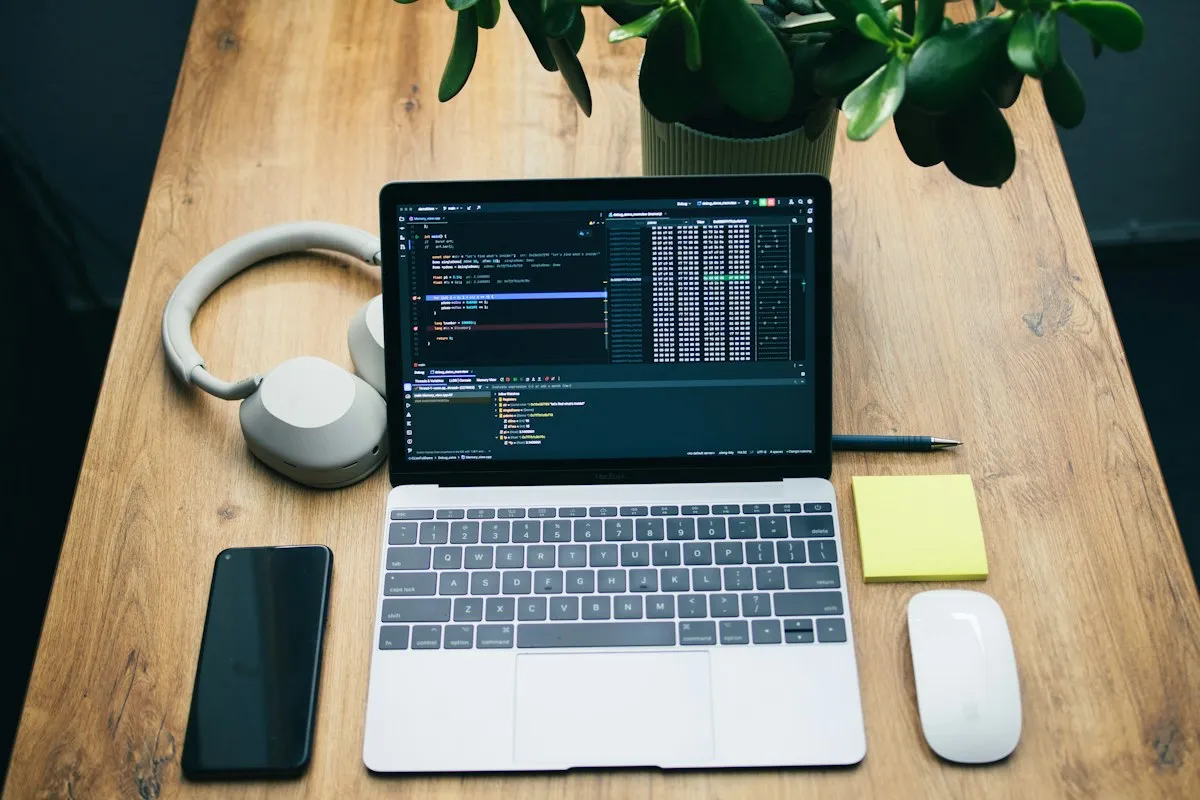
Veracode tested code from more than 100 AI models on 80 programming tasks for its 2025 GenAI Code Security Report. The code worked, but it introduced a security flaw in 45% of the tasks. On one common type of attack, cross-site scripting, the models failed to protect the code 86% of the time. For a site with a contact form or a customer login, that is not a theoretical risk. Bigger models did not do meaningfully better than smaller ones.
None of that means you should not use these tools. It means someone has to read what they wrote.
When to use AI, and when to hire
Use an AI builder if you are testing an idea, you need something online this week, the site is a simple brochure with a contact form, and you are happy to update it yourself. Spend the money you save on photos of your real business. They will do more for you than any template.
Hire a developer when the website has to do work: take bookings or payments, connect to the tools you run your business on, bring in customers from local search, meet accessibility standards, or grow into a client portal or a custom tool later. If you are not sure which side of that line you are on, my post on custom web apps versus websites walks through it.
And if you are weighing cost, AI builders are cheap to start and not always cheap to keep. Add the subscription, the paid plugins, the time you spend fixing things and the customers a slow site loses. My breakdown of what a website costs in Miami puts real numbers on both sides.
How I use AI in my own work
Since this post is about honesty: AI is part of how I build. It writes first drafts, suggests fixes and helps test. What it does not do is decide. I read the code it writes, test every page on real phones, measure speed and accessibility with Google's tools, and fix what it gets "almost right." AI makes me faster. It does not replace the person responsible for the result.
That is the real difference between the two options. An AI builder gives you a website. A developer gives you a website and someone accountable for whether it works, which matters most the day a booking fails or a form stops sending. For something bigger than a website, the same applies to custom web applications.